TruckSmarter Is Shutting Down: What Its Sudden Exit Teaches Startups About AI, Acquihires and Platform Risk
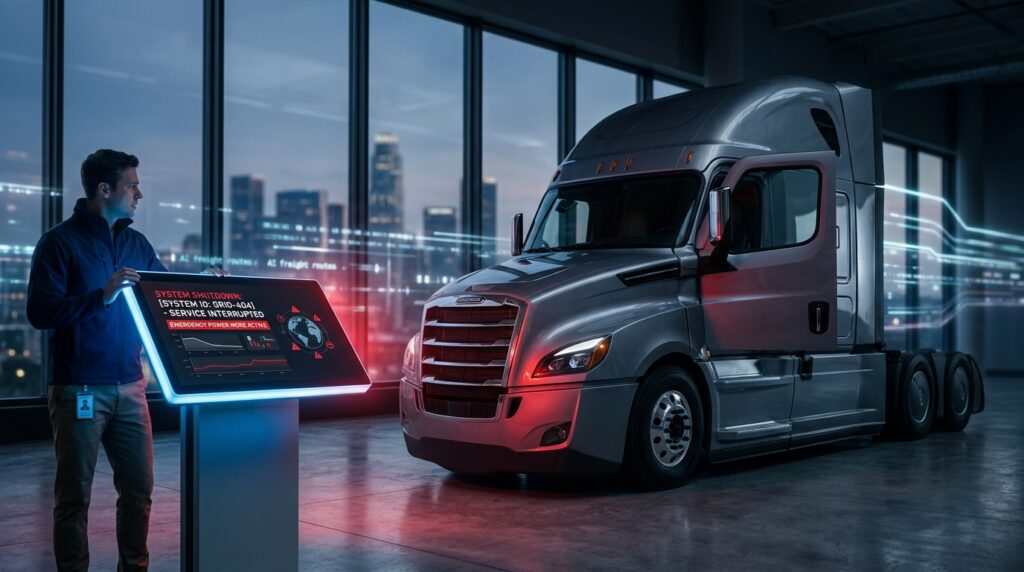
TruckSmarter, a trucking technology platform used by more than 500,000 carriers, is shutting down its core driver product after being acquired by an undisclosed buyer.
The company announced that its Dispatch app would be switched off, bringing an abrupt end to a product designed to use artificial intelligence to help truck drivers search for freight, bid on loads and book work through a conversational interface.
What makes the story especially interesting is not simply that another startup is disappearing.
TruckSmarter raised fresh funding only about a year before the shutdown.
It had spent years building technology for the trucking industry.
And instead of keeping the platform alive after the acquisition, the new owner appears to be allowing the product to disappear.
That raises an important question:
Was TruckSmarter acquired primarily for its people rather than its product?
There is no public confirmation that the deal is an acquihire. But several details make that possibility worth examining.
And beyond TruckSmarter itself, the situation offers useful lessons for startups, investors, business owners and anyone depending heavily on venture-backed software.
What Happened to TruckSmarter?
TruckSmarter was founded in San Francisco in 2021 by Dan Kao and Paolo Bernasconi.
The company built technology aimed at helping truck drivers and carriers find freight and manage parts of their businesses more efficiently.
Its platform included a free load board as well as Dispatch, an AI-powered product that allowed drivers to request freight using everyday language while software agents helped handle bidding and booking.
That made Dispatch more than another traditional load board.
Instead of manually searching through listings, drivers could theoretically tell the system what they wanted and allow AI-driven software to assist with finding the right opportunity.
But that product is now being shut down.
TruckSmarter told users that active Dispatch subscriptions would be canceled, while qualifying payments made during the previous 30 days were expected to be refunded.
The identity of the acquiring company has not been publicly disclosed.
There is one buyer we know it wasn’t.
OTR Solutions, which purchased TruckSmarter’s factoring and banking division in November 2025, said it did not acquire the rest of the company.
That leaves the technology industry with an unusual situation:
A startup with hundreds of thousands of users gets acquired, its product shuts down almost immediately, and the buyer remains unknown.
Could This Be an Acquihire?
Possibly.
But it is important to separate evidence from speculation.
Neither TruckSmarter nor the reporting cited in the source has publicly described the transaction as an acquihire.
An acquihire happens when one company acquires another company primarily because it wants the people working there.
Think of it as a shortcut to recruiting.
Instead of spending months or years trying to hire an entire team of experienced engineers, product managers and specialists individually, a larger company can acquire the startup where those people already work.
The buyer gets an established team that already knows how to work together.
Sometimes the startup’s technology is valuable too.
But in a true acquihire, the employees are often the most important asset.
That can produce an outcome that feels strange to customers:
The company gets acquired, but the product gets shut down.
From the buyer’s perspective, that can make perfect sense.
Maintaining a product the buyer doesn’t intend to develop creates infrastructure costs, customer-support responsibilities and engineering distractions.
If the buyer mainly wants the talent, closing the product can be the logical next move.
Why TruckSmarter Has the Shape of an Acquihire
Again, there is no public confirmation that this is what happened.
But several details support the theory.
1. The product is disappearing quickly
If an acquirer wanted TruckSmarter primarily because of its trucking platform and customer base, keeping the service operating would normally have strategic value.
More than 500,000 carriers had used the platform.
That represents significant distribution inside the trucking industry.
Yet Dispatch is being switched off instead of being expanded, migrated or integrated into another publicly identified platform.
That makes the software itself appear less central to the deal.
2. Customers aren’t being migrated somewhere else
When one technology company acquires another for its customers, there is usually some form of transition.
Users may be moved to another application.
Accounts may be transferred.
Customers may receive incentives to adopt the buyer’s existing service.
In this case, subscriptions are being canceled and eligible customers refunded.
That looks less like customer acquisition and more like customer exit.
3. The buyer hasn’t been announced
The acquiring company remains unidentified.
That doesn’t prove anything by itself.
Private transactions can remain confidential for many legitimate reasons.
But when a company buys a platform because it wants its customers, announcing the acquisition can often help reassure those customers and retain them.
Here, the absence of a publicly identified buyer adds another unusual element to the transaction.
4. TruckSmarter had become increasingly focused on AI
TruckSmarter sold its factoring and banking operation to OTR Solutions in November 2025.
After that transaction, the company increasingly concentrated on software and artificial intelligence for trucking.
That means one of TruckSmarter’s most interesting remaining assets was not necessarily its load board.
It was the team that had spent years combining transportation industry knowledge with AI product development.
In today’s technology market, that type of talent can be extremely valuable.
TruckSmarter Raised $16 Million Just a Year Earlier
This is where the story becomes particularly useful for startup founders.
TruckSmarter wasn’t a company that had stopped raising capital years ago.
It raised $16 million in equity in September 2025, led by Socium Ventures, with previous investors participating.
The funding was intended to support research, product development and hiring around the company’s technology strategy.
That round followed earlier funding including a $25 million Series B in 2022 led by Thrive Capital, with participation from firms including Bain Capital Ventures, Founders Fund and Andreessen Horowitz.
Then, only months after its September 2025 funding round, TruckSmarter sold its factoring and banking business.
Roughly a year later, its remaining product operation was headed for shutdown.
That doesn’t automatically mean the company was badly managed.
It demonstrates something more fundamental about venture-backed startups:
Raising money is not the same thing as building a sustainable company.
A startup can raise millions of dollars and still find itself under enormous pressure if adoption, revenue or growth doesn’t reach the levels required to justify further investment.
Why Startups Sometimes Accept Acquihires
Startup founders usually build companies hoping for enormous outcomes.
But venture capital creates expectations.
Investors aren’t generally funding companies so they can remain small businesses indefinitely.
They are looking for significant growth.
When that growth doesn’t arrive quickly enough, founders can find themselves with a shrinking set of options.
They might:
- Raise another funding round.
- Cut costs aggressively.
- Sell the business.
- Shut the company down.
- Sell individual assets.
- Seek a strategic buyer.
- Pursue an acquihire.
An acquihire can sometimes become the least painful option.
Investors may recover part of their capital.
Employees can potentially keep their jobs.
Founders may join a larger company.
The buyer gains an experienced team.
But there’s one group that may receive little benefit from that arrangement:
The customers.
And TruckSmarter’s shutdown demonstrates why that matters.
The Bigger Lesson: Your Favorite Software Can Disappear
Modern businesses depend heavily on cloud platforms.
Accounting software.
AI assistants.
Scheduling platforms.
Payment tools.
CRMs.
Marketing platforms.
Delivery systems.
Dispatch applications.
Many of these services can become deeply embedded into everyday operations.
But customers don’t control the companies behind them.
A startup can:
- Run out of funding.
- Be acquired.
- Change its pricing.
- Remove features.
- Pivot into another market.
- Sell part of its business.
- Shut the platform down entirely.
And sometimes customers receive very little warning.
That risk is especially important when businesses depend on free or heavily subsidized software.
A free tool can be incredibly valuable.
But the economics supporting that free product may be completely invisible to the user.
What TruckSmarter Users Should Do
For carriers affected by the shutdown, the immediate priority should be protecting business records and continuity.
Export important records
Download anything that may be difficult or impossible to retrieve after the service disappears.
That can include:
- Load history
- Rate confirmations
- Broker contacts
- Payment information
- Dispatch records
- Important documents
- Transaction history
Business records can become important later for accounting, taxes, insurance claims, customer disputes or audits.
Don’t assume a discontinued platform will remain accessible indefinitely.
Verify refunds
Users expecting refunds should confirm that the money actually reaches their accounts.
Keep copies of cancellation notices and billing records.
Establish alternative load sources
Businesses that relied heavily on Dispatch should make sure alternative freight-sourcing methods are already functioning.
The worst time to search for replacement software is after the original platform has disappeared.
Build direct industry relationships
Technology can make logistics dramatically easier.
But relationships remain valuable.
Carriers that have direct contacts with brokers and shippers are less dependent on any single technology platform.
The Startup Lesson: Revenue Quality Matters
TruckSmarter’s timeline also raises an important business question.
In November 2025, the company sold its factoring and banking operation.
That transaction allowed TruckSmarter to concentrate more heavily on software and AI.
Strategically, specialization can be powerful.
But recurring financial products can also generate predictable revenue.
When a startup sells a revenue-producing business unit and concentrates heavily on a newer technology product, execution becomes extremely important.
AI might generate excitement.
But excitement does not automatically create sustainable economics.
That is a lesson relevant far beyond TruckSmarter.
Thousands of startups are currently adding AI to existing products or launching businesses built almost entirely around AI.
Investors may fund them.
Customers may try them.
Technology publications may cover them.
But ultimately every company has to answer the same question:
Can this product generate enough lasting economic value to support the business behind it?
What Entrepreneurs Can Learn From TruckSmarter
There are several lessons founders can take from this situation.
1. Funding is runway, not success
A funding announcement can look like victory.
It isn’t.
Investment gives a startup more time to prove that its business works.
Revenue, customer retention and sustainable economics are what ultimately determine whether the company survives.
2. AI alone is not a business model
AI can dramatically improve a product.
But companies still need customers willing to pay enough to support the infrastructure, employees and growth required to operate the business.
The technology may be impressive while the economics remain difficult.
3. Don’t depend on one source of value
Companies with diversified revenue streams may have more strategic flexibility when market conditions change.
Selling off a profitable division can simplify a company, but it can also increase dependence on the remaining product succeeding.
4. Your team can become more valuable than your company
Even when a startup’s original business model doesn’t survive, the talent inside the company may remain extremely valuable.
That is one reason acquihires exist.
The startup may disappear.
The engineers, founders and product teams continue.
5. Customers need contingency plans too
Startup risk doesn’t only affect founders and investors.
Customers should also think about vendor concentration.
Ask yourself:
If one important software provider disappeared tomorrow, which part of my business would stop operating?
If the answer is significant, you need a backup plan.
Why This Matters
TruckSmarter’s shutdown is bigger than one trucking application disappearing.
It illustrates something happening across the technology industry.
Artificial intelligence is making specialized engineering teams increasingly valuable.
At the same time, venture-backed startups remain under pressure to show growth, sustainable revenue and a credible route to long-term profitability.
Sometimes the technology survives.
Sometimes another company buys the customer base.
And sometimes the people building the technology become the most valuable asset of all.
That may be what happened with TruckSmarter.
For now, however, that remains analysis rather than confirmed fact.
Until the buyer is revealed or additional details about the transaction emerge, the most accurate conclusion is straightforward:
TruckSmarter has been acquired, Dispatch is shutting down, and the structure of the deal strongly raises the possibility of an acquihire—but the company has not publicly confirmed that characterization.
For founders, the lesson is equally simple:
Capital can buy time. AI can create opportunity. But sustainable businesses still need durable customers, durable revenue and a plan that works before the runway disappears.
Aqyreon Take
The biggest takeaway isn’t that startups are risky.
Innovation requires risk.
The better lesson is that founders and customers should understand where their dependencies are.
Founders should know which parts of their business actually create sustainable economic value.
Customers should know which software platforms could seriously disrupt their operations if they disappeared.
Because in the cloud era, your most important business tool doesn’t have to physically break.
Sometimes the company behind it simply switches it off.