
Apple’s iPhone 18 Pro Pricing Strategy Could Quietly Boost Revenue in 2026
Apple does not always need a massive redesign to make more money.
Sometimes, the smartest move is pricing.
The iPhone 18 Pro is expected to become one of Apple’s most important products in 2026, not only because of its performance upgrades, but because of how Apple may position it inside the wider iPhone lineup.
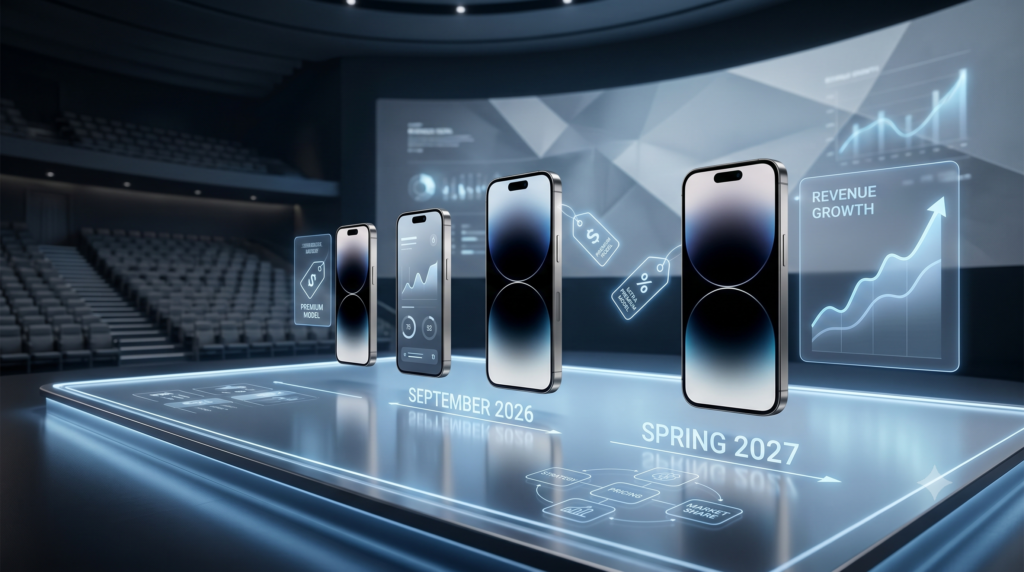
According to current rumors, Apple may launch the iPhone 18 Pro and iPhone 18 Pro Max in September 2026, while delaying the standard iPhone 18 and iPhone 18e until spring 2027. MacRumors also reports that Apple is expected to split the lineup, with the higher-end Pro and Fold models coming first and the more affordable models arriving later.
That may sound like a simple scheduling change.
But from a business perspective, it could be a very smart revenue strategy.
Apple may be creating a situation where customers who normally buy the regular iPhone in September are pushed toward one of two options: buy last year’s iPhone 17 or spend more for the new iPhone 18 Pro.
And for Apple, that second option is where the money is.
The Big Question: How Much Will the iPhone 18 Pro Cost?
Apple has not officially announced the iPhone 18 Pro price yet.
However, the expectation is that Apple may keep the iPhone 18 Pro pricing close to the iPhone 17 Pro level, instead of raising the price aggressively.
That matters because smartphone manufacturing costs are under pressure. Memory, storage, chips, displays, and camera components are not cheap. Every major phone maker has to decide where to absorb cost increases and where to pass them to customers.
Apple has an advantage because of its massive supply chain power. It can negotiate better component pricing than smaller competitors. But even Apple cannot ignore rising manufacturing costs forever.
So the strategy may be simple:
Keep the Pro price stable to protect demand, then shift more customers toward the Pro model.
That is powerful.
A stable price makes the iPhone 18 Pro feel like better value. But because the standard iPhone 18 may not arrive until months later, some buyers may decide to upgrade to the Pro instead of waiting.
That could increase Apple’s average selling price without making the Pro model look more expensive.
Why Keeping the iPhone 18 Pro Price Steady Could Work
Apple understands buyer psychology better than most tech companies.
A customer may resist a price increase.
But that same customer may accept paying more if they feel they are choosing a better product.
That is the beauty of Apple’s possible strategy.
If the iPhone 18 Pro launches in September 2026 and the standard iPhone 18 does not arrive until spring 2027, the Pro models become the only truly new iPhones available during the traditional September upgrade season.
That creates pressure.
Many iPhone users are used to upgrading in the fall. Carriers promote new plans. Trade-in offers become aggressive. Families upgrade devices before the holidays. Tech buyers expect the newest iPhone in September.
If the regular iPhone 18 is missing from that window, buyers may ask themselves:
“Should I buy the iPhone 17, or should I just move up to the iPhone 18 Pro?”
That is exactly the kind of decision Apple may want them to make.
The iPhone 17 Could Still Help Apple Make Money
If the standard iPhone 18 is delayed, Apple would likely keep selling the iPhone 17.
That could be profitable too.
By the time the iPhone 18 Pro arrives, the iPhone 17 would already be a year-old design. Apple’s production costs may be lower. Component pricing may be more stable. Manufacturing would already be mature.
So Apple could keep selling the iPhone 17 as the “mainstream” iPhone while using the iPhone 18 Pro as the premium upgrade.
That gives Apple two revenue lanes:
The iPhone 17 for value-focused buyers.
The iPhone 18 Pro for customers who want the newest technology.
This is not just about selling more phones.
It is about controlling customer movement inside the product lineup.
Why the Pro Models Matter More Than Ever
The Pro iPhones are not just more expensive. They are also more strategically important.
Apple is building more of its future around Apple Intelligence, advanced camera features, better processors, and on-device AI performance. Apple’s current iPhone lineup is already being positioned around Apple Intelligence, with Apple highlighting the iPhone 17 family and related models as designed for its AI features.
That makes Pro models valuable because they usually have stronger chips, better thermal performance, improved cameras, and more premium hardware.
If Apple can convince more users to move into Pro models, it does more than increase revenue today.
It also increases the number of users with hardware powerful enough to support future AI features.
That matters because Apple Intelligence is not just a software feature. It depends heavily on device performance.
A user with a Pro iPhone may have a better experience with AI tools, camera workflows, video editing, productivity features, and future iOS updates.
So when Apple pushes customers toward Pro devices, it may also be preparing its customer base for a more AI-driven iPhone future.
The Split Launch Strategy: Apple Could Create Two iPhone Sales Waves
Traditionally, Apple’s iPhone business has been centered around one major fall launch.
New iPhones arrive. Demand spikes. Revenue jumps. Then the cycle slowly cools.
But if Apple splits the iPhone 18 lineup, it could create two major sales waves:
Wave 1: September 2026
iPhone 18 Pro, iPhone 18 Pro Max, and potentially other premium models.
Wave 2: Spring 2027
Standard iPhone 18 and iPhone 18e.
TechRadar recently described this rumored shift as a possible move toward two separate launch windows, with premium models expected in September 2026 and more affordable models expected in spring 2027.
That could help Apple spread revenue more evenly across the year.
Instead of relying on one massive September cycle, Apple gets another major iPhone moment in spring.
That is important because the smartphone market is mature. Most people are not buying new phones every year because they need to. They are buying when the value, timing, carrier deal, or feature set makes sense.
Two launch windows give Apple more ways to create buying urgency.
How This Could Disrupt Android Competitors
The timing is also interesting because spring is when many Android brands try to dominate the premium smartphone conversation.
Samsung, Google, Xiaomi, OnePlus, Honor, and other major phone makers often use early-year events and Mobile World Congress season to push new devices.
If Apple launches the standard iPhone 18 in spring 2027, it could steal attention from Android competitors during a window where Apple normally stays quieter.
That would be a strategic shift.
Apple would no longer dominate only September.
It could also compete directly in the spring smartphone cycle.
For Android brands, that could make the market more difficult. They would have to compete not only against last year’s iPhone, but against a fresh Apple launch in the middle of their own promotional season.
Who Should Upgrade to the iPhone 18 Pro?
The iPhone 18 Pro may make sense for buyers who want the newest Apple hardware in September 2026 and do not want to wait until spring 2027.
It may be especially attractive for:
Creators who shoot video, edit content, and rely on camera performance.
Business users who need strong battery life, speed, and long-term software support.
AI-focused users who want better performance for Apple Intelligence and future on-device features.
Tech enthusiasts who want the newest iPhone as soon as it launches.
People upgrading from older iPhones who want a device that can last several years.
But for budget-conscious buyers, waiting may still make sense.
If the standard iPhone 18 arrives in spring 2027, it could provide a more affordable path into Apple’s next-generation lineup.
The Business Lesson: Apple Knows How to Move Customers Up the Ladder
This is the real Aqyreon takeaway.
Apple does not only sell phones. Apple designs product ladders.
A product ladder is when a company gives customers multiple options at different price levels, then makes the higher-priced option feel more attractive.
In this case, Apple may be doing that by using timing.
Instead of raising the iPhone 18 Pro price aggressively, Apple may keep the Pro price steady and create a launch gap between the Pro and standard models.
That makes the Pro feel like the most exciting option during the biggest buying season of the year.
This is how companies increase revenue without making customers feel forced.
They create a smarter upgrade path.
What This Means for Creators, Affiliates, and Tech Bloggers
For tech bloggers and affiliate publishers, this topic has strong content potential.

People will search for:
“Should I wait for iPhone 18?”
“iPhone 18 vs iPhone 18 Pro”
“Is iPhone 18 Pro worth it?”
“iPhone 17 vs iPhone 18 Pro”
“Best iPhone to buy in 2026”
“Should I upgrade to iPhone 18 Pro or wait?”
These are high-intent keywords.
That means they can support affiliate content around:
Phone cases
Screen protectors
MagSafe accessories
Chargers
Power banks
Wireless earbuds
Trade-in offers
Carrier plans
AppleCare alternatives
Refurbished iPhones
Mobile security apps
Cloud storage
Creator gear
The money is not only in the phone itself.
The money is in the buying journey around the phone.
Best Accessories for Your Next iPhone Upgrade
If you are planning to upgrade to the iPhone 18 Pro or any new iPhone model, do not wait until after purchase to think about protection and accessories.

A premium phone needs a premium setup.
Recommended add-ons:
- Protective iPhone case
- Tempered glass screen protector
- MagSafe charger
- Portable power bank
- USB-C fast charger
- Mobile antivirus or VPN
- Pocket Cloud backup storage
- Camera grip or tripod for creators
Before upgrading, compare the best iPhone accessories and protection tools to make sure your new device is ready from day one. Shop Recommended iPhone Accessories
Final Aqyreon Take
Apple’s rumored iPhone 18 strategy is not just about pricing.
It is about timing, psychology, and customer movement.
If Apple keeps the iPhone 18 Pro price steady while delaying the standard iPhone 18, it could push more buyers toward premium models without making the Pro lineup feel overpriced.
That could increase revenue in late 2026, create another sales wave in spring 2027, and give Apple a stronger position against Android competitors.
The lesson for business owners is simple:
Sometimes growth does not come from selling more products. It comes from positioning the right product at the right time.
Apple may be using the iPhone 18 Pro to prove that again.

Michael Agwu
Michael explores the latest gadgets, reviews new tech, and breaks down how devices impact daily life. His content helps readers stay updated with modern tech trends.