
Sony Alpha 7S III Review: Is This Low-Light Video Powerhouse Still Worth $4,000?
The Sony Alpha 7S III is not a conventional high-resolution mirrorless camera. It is a specialist tool built primarily for filmmakers, videographers and hybrid creators who care more about excellent 4K video, dependable autofocus and strong low-light performance than producing enormous photographs.
Its 12.1-megapixel full-frame sensor may look modest beside newer 33MP and 50MP cameras. However, those larger pixels help the A7S III perform exceptionally well in dark environments while supporting 4K recording at up to 120 frames per second.
Sony still lists the A7S III at $3,999.99 for the body, placing it above the more balanced Alpha 7 IV and slightly below Sony’s cinema-focused FX3.
Sony Alpha 7S III at a Glance
| Feature | Sony Alpha 7S III |
|---|---|
| Sensor | 12.1MP full-frame Exmor R BSI CMOS |
| Maximum photo speed | Up to 10 fps |
| Maximum video | 4K at 120p |
| Full HD slow motion | Up to 240p |
| Internal recording | Up to 10-bit 4:2:2 |
| Maximum expanded ISO | 409,600 |
| Stabilization | Five-axis in-body stabilization |
| Autofocus | 759 phase-detection points |
| Card slots | Two CFexpress Type A/SD UHS-II hybrid slots |
| Weight | Approximately 699 grams |
| Sony price | $3,999.99, body only |
Sony designed the camera around a 12.1MP backside-illuminated sensor that prioritizes sensitivity and readout speed. It supports 12.1MP stills at up to 10 fps, 4K/120p video and Full HD recording at up to 240p.
Design and Build Quality
The A7S III uses Sony’s familiar Alpha-style mirrorless body rather than the box-shaped design of a dedicated cinema camera.
It weighs approximately 699 grams with its battery and memory card, making it light enough for handheld work, travel productions, gimbals and compact video rigs.
Its controls are well suited to creators who regularly switch between video and photography. The camera also includes a fully articulating three-inch touchscreen, which is useful for self-recording, low-angle filming and monitoring from the front of the camera.
The electronic viewfinder is one of its strongest hardware features. It has approximately 9.44 million dots, 0.90x magnification and selectable refresh rates of up to 120 fps in NTSC mode.
One design problem to consider
The camera’s side-facing microphone, headphone and HDMI connections can interfere with the movement of its flip-out display when several cables are connected.
One verified Sony purchaser specifically criticized this layout, saying that attached cables made it harder to position the screen during run-and-gun filming.
That does not make the camera unusable, but creators building a fully connected rig should plan their cable placement carefully.
Video Quality: The Main Reason to Buy It
The A7S III’s strongest argument is its highly flexible 4K recording system.
It can record 4K footage internally at up to 120p with 10-bit 4:2:2 color sampling, giving filmmakers more information for color correction and grading than standard 8-bit video.
Its recording options include:
- XAVC S using H.264 compression
- XAVC HS using H.265 compression
- XAVC S-I All-Intra recording
- S-Log2 and S-Log3 profiles
- HLG HDR recording
- RAW video output through HDMI
The availability of 4K/120p makes the camera particularly useful for commercial work, sports, music videos and cinematic slow-motion footage.
Unlike some cameras that reserve their best color quality for lower frame rates, the A7S III can capture 4K/120p in 10-bit 4:2:2 at up to 280 Mbps.

What 4K/120p means in practice
Footage recorded at 120 fps can be slowed down to one-quarter speed on a 30 fps timeline or one-fifth speed on a 24 fps timeline.
This allows creators to capture smooth slow-motion shots of:
- Products
- Sports
- Weddings
- Concerts
- Vehicles
- Fashion
- Food preparation
- Commercial demonstrations
The trade-off is larger file sizes, increased storage requirements and potentially greater heat and battery consumption.
Low-Light Performance
Low-light recording remains the camera’s biggest competitive advantage.
The A7S III has a standard video ISO range of 80–102,400, expandable to ISO 409,600. Its 12.1MP resolution means each photosite can be relatively large, helping the sensor collect more light than higher-resolution sensors of the same physical size.
This makes it especially suitable for:
- Concerts and live entertainment
- Weddings and receptions
- Nighttime documentaries
- Indoor events
- Real-estate interiors
- Churches and performance venues
- Independent productions with limited lighting equipment
Buyer comments on Sony’s product page repeatedly praise its low-light performance. One verified purchaser described the 4K quality and low-light capability as “simply amazing,” while another reported using the camera successfully for concerts and commercial productions.
The expanded ISO ceiling should not be interpreted as meaning ISO 409,600 will always look clean. Image quality will deteriorate at extreme settings. The advantage is that the camera remains usable in lighting conditions where many other cameras would struggle considerably more.
Autofocus Performance
The A7S III uses Sony’s Fast Hybrid autofocus system with 759 phase-detection points and 425 contrast-detection points.
Its focus sensitivity extends to EV -6 with an F2 lens, helping it identify subjects in very dark environments.
It supports:
- Human Eye AF for photos and video
- Animal Eye AF for still photography
- Subject tracking
- Adjustable autofocus transition speed
- Adjustable subject-shift sensitivity
This combination is valuable for solo creators who cannot rely on a separate camera operator or focus puller.
A presenter can move toward or away from the camera while the autofocus system continues tracking their face and eyes. Wedding and event shooters can also move quickly between subjects without manually adjusting focus for every shot.
Image Stabilization
Sony includes five-axis sensor-shift stabilization rated at up to 5.5 stops of compensation under the company’s testing conditions.
The camera also provides an electronic Active Mode for video, although this introduces a crop.
The stabilization is helpful for handheld work, but it does not completely replace a gimbal. Walking shots can still show movement, particularly with longer lenses or aggressive camera motion.
For static handheld shots, interviews and gentle movement, however, the stabilization can make the camera significantly easier to use without a large support system.
Photography Performance
The A7S III can take good photographs, but still photography is not its main strength.
It captures 12.1MP images at up to 10 fps and supports 14-bit RAW, JPEG and HEIF formats.
Twelve megapixels can be sufficient for:
- Social media
- Websites and blogs
- Small and medium-sized prints
- Event galleries
- News and documentary photography
- Video thumbnails
However, it provides limited cropping flexibility compared with 33MP, 50MP or 61MP cameras.
A Sony reviewer who praised the A7S III’s video quality said they preferred using a higher-resolution Alpha camera for still photography because of the A7S III’s 12MP output.
That captures the camera’s identity accurately: it is a video-first camera that can also take respectable photographs.
Storage and Recording Media
The A7S III includes two hybrid memory-card slots. Each accepts either:
- CFexpress Type A cards
- SD, SDHC or SDXC cards supporting UHS-I or UHS-II
The camera supports simultaneous recording, automatic card switching, file sorting and copying between cards.
This flexibility allows creators to use more affordable SD cards for many recording modes while switching to faster CFexpress Type A cards when required.
The downside is that CFexpress Type A cards remain relatively expensive compared with standard SD cards and larger CFexpress Type B media.
Creators planning to record high-bitrate 4K footage should include cards, storage drives and backup capacity in the real cost of ownership.
Battery Life and Connectivity
Sony rates the camera for approximately:
- 80 minutes of actual recording through the viewfinder
- 95 minutes of actual recording using the LCD
- Up to 135 minutes of continuous recording using the LCD
- Approximately 600 still photographs using the LCD
The camera supports USB-C charging and USB Power Delivery, making it possible to extend recording sessions with a compatible external power source.
Its connections include:
- Full-sized HDMI
- 3.5mm microphone input
- 3.5mm headphone output
- USB-C
- Multi Interface Shoe with digital audio support
- Bluetooth and wireless connectivity
A full-sized HDMI port is particularly valuable for professional monitoring and external RAW recording because it is generally more secure than a micro-HDMI connection.
What Owners Think
Sony’s collected customer reviews give the A7S III an overall score of 4.7 out of 5 from 182 reviews. Sony reports that 93% of responding reviewers recommend the product. Picture quality received an average score of 4.7, while design and ease of use both scored 4.6.
What buyers like
Owners frequently praise:
- Low-light image quality
- 4K/120p recording
- Video autofocus
- Overall picture quality
- Compact form factor
- Recording-format flexibility
Common complaints
Negative feedback focuses more on ownership and ergonomics than image quality:
- The 12MP resolution limits serious still photography.
- Cables may restrict movement of the articulating screen.
- CFexpress Type A cards are expensive.
- Firmware updating can be frustrating.
- Repair and support experiences may be costly.
- The body may feel less secure for users with larger hands.
One advanced user rated the camera’s performance positively but criticized its grip, firmware process, warranty and repair support.
Sony A7S III vs. Sony A7 IV
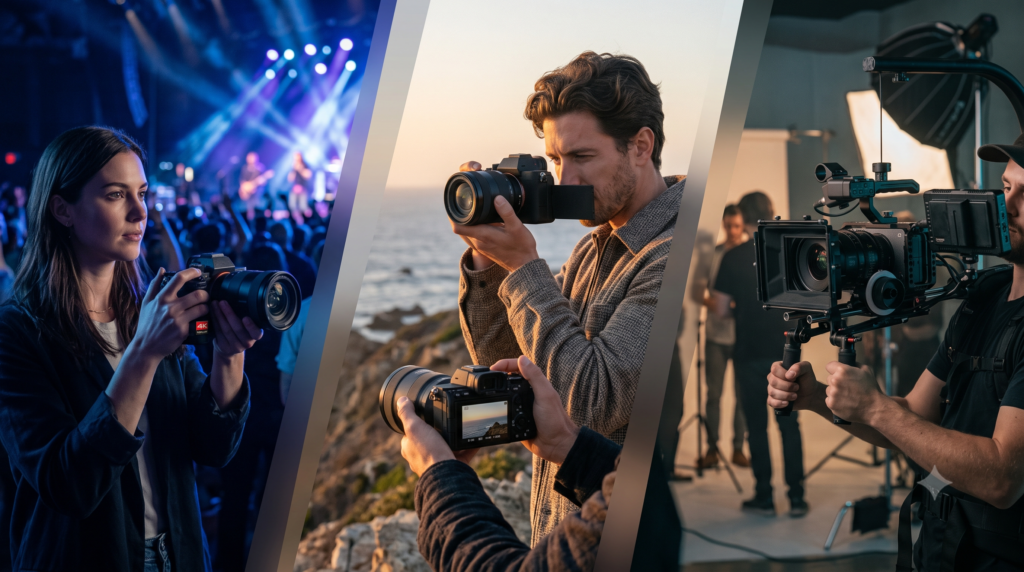
The A7 IV is the better general-purpose hybrid camera. It has a 33MP full-frame sensor, giving photographers considerably more detail and cropping flexibility. Sony currently lists the A7 IV body at $1,999.99, making it roughly half the price of the A7S III.
| Feature | Sony A7S III | Sony A7 IV |
|---|---|---|
| Resolution | 12.1MP | 33MP |
| Maximum 4K frame rate | 120p | 60p |
| Low-light focus | Exceptional | Very good |
| Photography | Adequate | Much stronger |
| Slow motion | Better | More limited |
| Best use | Professional video | Hybrid photo and video |
| Current Sony price | $3,999.99 | $1,999.99 |
Choose the A7S III when:
- Video is your main priority.
- You regularly shoot in low light.
- You need 4K/120p.
- You do extensive color grading.
- You want better slow-motion flexibility.
Choose the A7 IV when:
- You shoot both photos and video.
- You need more detail for portraits, events or products.
- Your videos rarely require 4K/120p.
- You want better value.
- You have a lower camera budget.
For most small businesses, bloggers and hybrid creators, the A7 IV is the more practical purchase. The A7S III makes sense when its specialized video advantages directly support paid production work.
Sony A7S III vs. Sony FX3
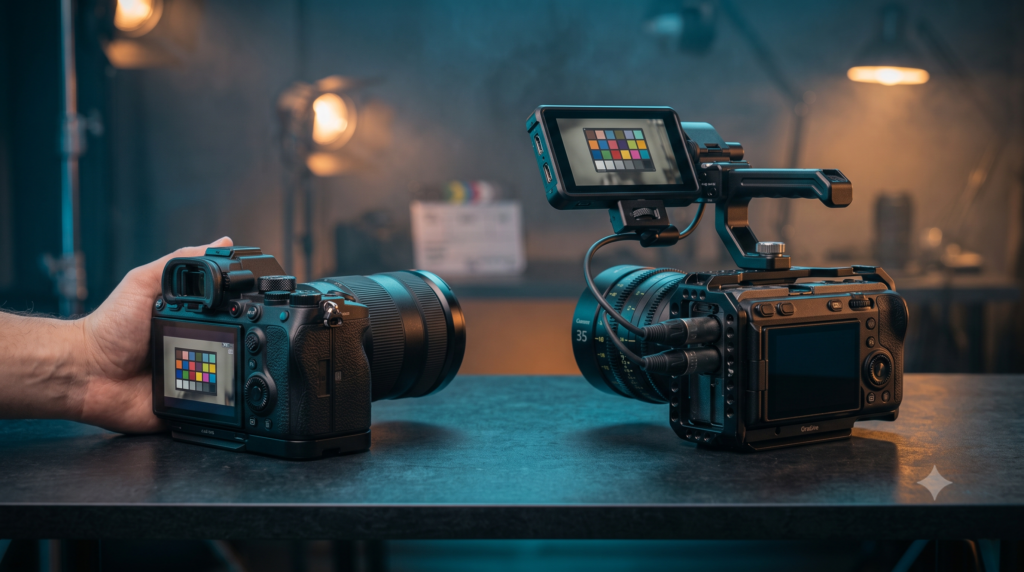
The FX3 uses the Cinema Line design and targets dedicated filmmakers. Sony currently lists the FX3 at $4,299.99, only about $300 more than the A7S III.
| Feature | Sony A7S III | Sony FX3 |
|---|---|---|
| Body design | Traditional mirrorless | Cinema-focused body |
| Electronic viewfinder | Yes | No |
| Internal cooling fan | No | Yes |
| Mounting points | Requires cage for larger rigs | Built into the body |
| Photography experience | Better | Secondary |
| Long recording sessions | Good | Better suited |
| Best use | Video and occasional photos | Dedicated cinema production |
| Sony price | $3,999.99 | $4,299.99 |
The cameras serve similar video users, but their bodies encourage different workflows.
The A7S III is better for creators who want a viewfinder, traditional photography controls and a camera that can move comfortably between stills and video.
The FX3 is better for production teams that prioritize long recording sessions, rigging, professional audio and cinema-style operation.
At their current prices, filmmakers who rarely take photographs should seriously compare the FX3 before buying the A7S III.
Strengths
Exceptional low-light capability: Its sensor and ISO range make it highly capable in dark environments.
Excellent 4K slow motion: Internal 4K/120p with 10-bit 4:2:2 recording remains a major advantage.
Dependable autofocus: Eye detection and subject tracking make it suitable for solo operators.
Flexible recording formats: H.264, H.265, All-Intra, S-Log3, HLG and external RAW provide multiple workflows.
Strong viewfinder: The high-resolution EVF is excellent for handheld and outdoor work.
Dual-format card slots: Users can choose between SD and CFexpress Type A cards.
Compact body: It provides professional video features without requiring a large cinema-camera setup.
Weaknesses
Only 12.1MP for photographs: It is less suitable for heavy cropping, large prints and detailed commercial photography.
High price: At $3,999.99, it competes directly with cinema cameras and newer hybrid models.
No internal RAW recording: RAW requires an external recorder through HDMI.
No Open Gate recording: Creators who need flexible horizontal and vertical reframing may find newer cinema cameras more attractive.
Expensive accessories: Fast cards, lenses, batteries, external monitors and audio equipment can push the complete setup well beyond $6,000.
Screen and cable interference: Connected ports can restrict the articulating display.
Older feature set: Although its image quality remains competitive, newer cameras offer more advanced subject recognition, creator-focused framing tools and modern cinema workflows.
Who Should Buy the Sony A7S III?
The A7S III remains a strong choice for:
- Wedding filmmakers
- Documentary creators
- Concert videographers
- Event production teams
- Commercial video studios
- Music-video directors
- YouTube creators working in controlled studios
- Filmmakers who frequently shoot at night
- Hybrid shooters who prioritize video over photography
Who Should Skip It?
Consider another camera when:
- Photography is equally important as video.
- You need high-resolution product or landscape images.
- You mainly record talking-head videos at 24p or 30p.
- You do not need 4K/120p.
- You want Open Gate recording.
- You require internal RAW.
- Your entire camera-and-lens budget is around $4,000.
A creator who only needs standard 4K YouTube footage is unlikely to use enough of the A7S III’s capabilities to justify its price.
Aqyreon Verdict
Rating: 8.5/10
The Sony Alpha 7S III remains an excellent professional video camera. Its low-light performance, autofocus, 10-bit recording and 4K/120p capability continue to make it valuable for demanding production work.
However, its value proposition is narrower today.
At nearly $4,000, buyers must decide whether they actually need the A7S III’s low-light and high-frame-rate advantages. The cheaper A7 IV is a stronger all-around hybrid, while the slightly more expensive FX3 offers a body designed more specifically for filmmaking.
Bottom line: Buy the A7S III when video is your business, low-light work is common and 4K slow motion matters. For everyday creators who also care about photography, the A7 IV offers considerably better value.
Pros and Cons
Pros
- Outstanding low-light video
- Internal 4K/120p in 10-bit 4:2:2
- Reliable autofocus and Eye AF
- Excellent electronic viewfinder
- Five-axis stabilization
- Flexible SD and CFexpress card support
- Full-sized HDMI connection
Cons
- Expensive for an older body
- Only 12.1MP for still photography
- No internal RAW
- No Open Gate recording
- CFexpress Type A media can be costly
- Screen movement can be restricted by cables
- FX3 may be better for dedicated filmmakers