
Uber’s New AV Data Strategy: How Millions of Drivers Could Become a Sensor Network for Self-Driving Cars
Uber may no longer be trying to build its own self-driving car empire the way it once did, but the company is clearly not walking away from the autonomous vehicle future.
Instead, Uber appears to be positioning itself for something even bigger:
Becoming the data layer behind the self-driving car industry.
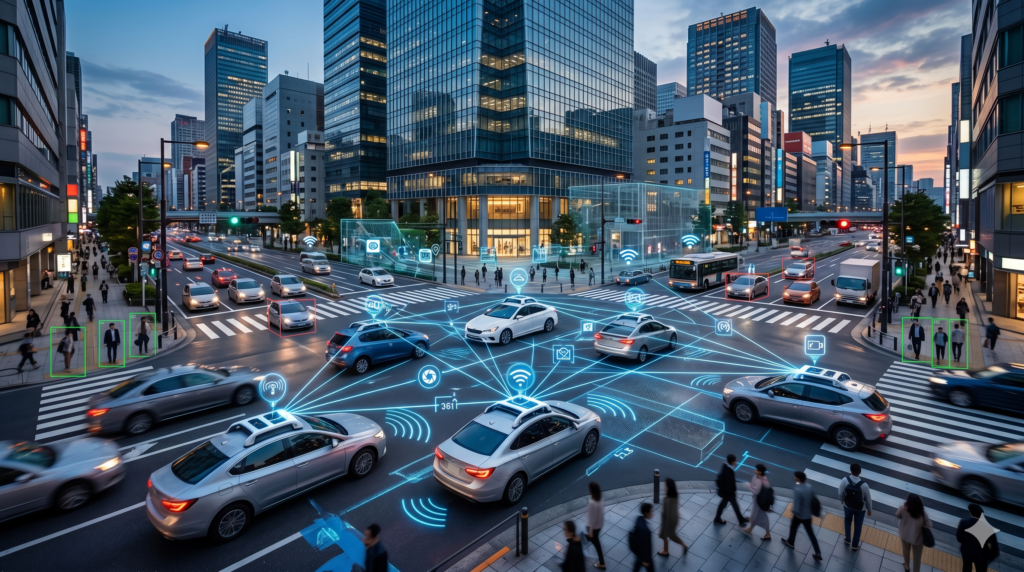
According to comments from Uber CTO Praveen Neppalli Naga at TechCrunch’s StrictlyVC event in San Francisco, Uber eventually wants to equip human drivers’ vehicles with sensors that can collect real-world driving data for autonomous vehicle companies. The idea is connected to Uber’s newer AV Labs effort, which currently uses a small dedicated fleet of sensor-equipped vehicles before expanding further.
At first, this may sound like a technical experiment.
But in reality, it could become one of Uber’s most important strategic moves in years.
Because the future of self-driving cars may not only depend on who builds the best vehicle. It may depend on who owns the best real-world driving data.
The Big Idea: Uber Drivers as a Moving Data Network
Uber has millions of drivers around the world. Every day, those drivers travel through cities, suburbs, airports, school zones, traffic jams, construction areas, bad weather, nightlife districts, and unpredictable road conditions.
That is exactly the kind of messy real-world data autonomous vehicle companies need.
Self-driving cars do not just need perfect highway footage. They need edge cases. They need strange situations. They need data from difficult intersections, confusing signs, aggressive drivers, pedestrians crossing unexpectedly, emergency vehicles, school buses, cyclists, weather changes, and unusual traffic patterns.
Uber’s plan is to eventually use human-driven vehicles as data collectors.
Right now, AV Labs is starting with Uber-operated sensor-equipped cars, not the full driver network. But the long-term direction is clear: if Uber can safely and legally expand this model, it could turn parts of its ride-hailing network into a massive physical-world data engine.
That matters because many AV companies face one major limitation:
They need more real-world driving data than their own fleets can collect.
Uber already has the distribution. The company already has vehicles on the road. The company already has maps, routes, trip behavior, marketplace demand, and transportation relationships.
Now it wants to add another layer: sensor-based training data.
Why This Matters: The Bottleneck Is No Longer Just Technology
For years, people assumed the self-driving race would be won by the company with the best software.
But Uber’s CTO made a different point: the bottleneck is data. Autonomous vehicle companies need to collect enough real-world driving scenarios to train, test, and improve their models.
That is a powerful insight.
AI systems improve when they see more examples. But self-driving cars are not like chatbots that can be trained on text from the internet. Autonomous vehicles must understand the physical world.
They need to learn from actual roads.
This is why data collection becomes expensive. An AV company can build a fleet, send cars around cities, collect sensor data, label that data, and use it for training. But that process takes capital, time, and operational scale.
Uber already has scale.
That is the advantage.
If Uber can build an “AV cloud” — a searchable library of labeled driving data — it could give AV partners access to scenarios they might not easily collect themselves. TechCrunch reported that Uber’s system could also let partners run models in “shadow mode” against real Uber trips, meaning companies could simulate how an AV model would have performed without actually putting a driverless car on the road.
That could be valuable for testing, training, and improving autonomous driving systems.
The Aqyreon Interpretation: Uber Is Trying to Own the Layer Below Robotaxis
Here is the deeper business angle:
Uber may not need to own the self-driving car to profit from the self-driving future.
Instead, it can own the infrastructure that self-driving companies need.
Think about it this way:
Waymo, Nuro, Wayve, Lucid-linked robotaxi efforts, and other AV companies all need roads, riders, data, routing, demand, and deployment partners. Uber already sits near the center of that ecosystem.
Uber has also been building partnerships with AV companies. TechCrunch reported that Uber has partnerships with 25 AV companies, including Wayve.
That gives Uber a powerful role.
It can be:
- The marketplace where riders request autonomous rides
- The deployment partner for AV companies
- The data platform helping AV companies train models
- The investor in selected AV companies
- The operational layer connecting vehicles, demand, and cities
This is not just about transportation.
This is about AI infrastructure.
Uber may be trying to become for autonomous vehicles what cloud providers became for software companies: the platform layer everyone needs but few can build at global scale.
Why Uber Abandoning Its Own Self-Driving Unit May Not Be the End of the Story
Uber previously moved away from building its own self-driving cars. For years, critics wondered if that decision would eventually hurt the company. If robotaxis become mainstream, would Uber still matter?
This new strategy gives Uber a possible answer:
Uber does not have to build every robotaxi. It can power, distribute, and monetize the robotaxi ecosystem.
That is a smarter and less capital-heavy path.
Building autonomous vehicles from scratch is expensive, slow, risky, and highly regulated. But being the marketplace and data layer for AV companies may be more scalable.
Uber can let AV specialists focus on autonomy while Uber focuses on what it already understands:
- Marketplace demand
- Rider behavior
- Routing
- City-level transportation patterns
- Driver and fleet operations
- Partnerships
- Real-world mobility data
That could make Uber more important, not less important, in the next phase of transportation.
The Privacy and Regulation Question
This strategy also raises serious questions.
If drivers’ cars eventually receive sensor kits, what exactly will be collected? Road footage? Location data? Pedestrian movement? License plates? Driver behavior? Passenger-adjacent data? Neighborhood patterns?
Uber’s CTO acknowledged that regulations matter and that states need clarity around what sensors mean and what data sharing involves.
That is important because the line between useful road data and sensitive surveillance can become blurry.
For drivers, the key questions may include:
- Will participation be optional?
- Will drivers be paid extra?
- Who owns the data collected from their vehicles?
- Can drivers opt out?
- Will sensor kits affect insurance, liability, or vehicle maintenance?
- How will Uber protect personal or location-sensitive data?
- Could cities or regulators restrict this type of collection?
For the public, the bigger question is even simpler:
Are we comfortable with everyday vehicles becoming part of a massive AI training network?
This is where Uber must be careful. The business opportunity is huge, but trust will matter.
If people feel this becomes another form of invisible surveillance, the backlash could be significant.
Why AV Companies May Want This
Autonomous vehicle companies need more than controlled test routes.
They need diversity.
A self-driving model trained mostly in one city may struggle in another. A system that performs well in Phoenix may face different challenges in San Francisco, London, New York, Dallas, Miami, Lagos, or Chicago.
Road behavior changes by city. Weather changes by region. Driver culture changes by country. Infrastructure quality changes by neighborhood.
That is where Uber’s global footprint becomes valuable.
If Uber can gather and label road scenarios across different environments, AV companies could use that data to improve their models faster.
This is especially relevant as AI moves from digital environments into the physical world.
The next AI wave is not only about writing, coding, or image generation. It is about machines understanding roads, factories, warehouses, hospitals, farms, delivery routes, and real-world spaces.
Uber’s sensor strategy fits directly into that trend.
The Business Model: “Democratize Data” Today, Monetize Power Tomorrow?
Uber’s CTO said the goal is not to make money from the data right now, but to democratize it.
That sounds good.
But let’s be realistic.
If Uber builds one of the largest real-world mobility datasets for autonomous vehicle development, that data will have commercial value.
Even if Uber does not directly sell data in the beginning, it can still gain leverage in other ways:
- Equity investments in AV startups
- Preferred marketplace partnerships
- Exclusive deployment agreements
- Data access tied to Uber integration
- Model-testing partnerships
- Fleet management relationships
- Licensing or cloud-style access in the future
This is why the strategy matters.
Uber may not monetize the data immediately, but it could use the data to become more central to the AV ecosystem.
And in business, strategic control can be more valuable than short-term revenue.
What This Means for Drivers
For Uber drivers, this could create both opportunity and concern.
On the opportunity side, sensor-equipped vehicles could potentially create a new income stream. If drivers are helping collect valuable data, Uber may need to compensate them for participation, mileage, routes, or sensor uptime.
That could turn some drivers into part-time data operators.
But there are concerns too.
Drivers may ask whether this creates more monitoring, more responsibility, or more wear on their vehicles. They may also worry about whether data collection changes their relationship with Uber from contractor to infrastructure participant.
This is where transparency will matter.
If Uber wants drivers to participate, the company will likely need to explain:
- What the sensors collect
- How the data is used
- How drivers are paid
- Whether participation affects ratings or trip access
- Who handles sensor installation and maintenance
- What happens if equipment damages a vehicle
- Whether data collection is active during personal driving
The technology may be exciting, but the driver relationship will be one of the biggest practical challenges.
What This Means for Startups
For startups, this story carries a major lesson:
The next big AI opportunities may come from owning unique data pipelines.
Uber is not just thinking like a transportation company. It is thinking like an AI infrastructure company.
That is a lesson for founders.
The most valuable companies in the next wave may not be the ones with generic AI tools. They may be the ones with access to unique, hard-to-copy real-world data.
Examples include:
- Road data
- Healthcare workflow data
- Construction site data
- Manufacturing data
- Logistics data
- Retail behavior data
- Energy usage data
- Farm and climate data
- Insurance risk data
- Local services data
If a startup can collect, clean, label, and structure valuable physical-world data, it can become a major player in the AI economy.
Uber is showing how powerful that strategy can be when combined with distribution.
What This Means for Businesses
For business leaders, the message is clear:
AI is moving from software into the real world.
Companies that control real-world operations may have a hidden advantage. A ride-hailing company has driving data. A logistics company has delivery data. A hospital has clinical workflow data. A construction company has site data. A retailer has foot traffic and inventory data.
The question is:
Are you treating your operational data as a strategic asset?
Many businesses are sitting on valuable data without realizing it. The companies that organize that data properly may be able to build better AI tools, negotiate stronger partnerships, or create new revenue streams.
Uber’s AV Labs strategy is a reminder that data is not just something companies collect in the background.
In the AI economy, data can become the product.
Aqyreon Takeaway
Uber’s plan to turn drivers into a possible sensor network is not just a transportation story.
It is an AI infrastructure story.
The company understands that autonomous vehicles need more than advanced models. They need real-world scenarios at scale. Uber’s global driver network could become one of the most powerful data collection systems in the AV industry if the company can solve the regulatory, privacy, driver compensation, and technical challenges.
This could help Uber remain relevant even if the future becomes more autonomous.
Instead of fighting every robotaxi company, Uber may become the platform they need.
And that is the real lesson:
In the next phase of AI, the winners may not only be the companies building the smartest models. They may be the companies controlling the most useful real-world data.
The image used in this post is AI generated