Why Tech Billionaires Want Christians to Believe in AI
Artificial intelligence has moved beyond the lab, beyond the boardroom, and far beyond the startup pitch deck. It is no longer just a product category or a business trend. It is becoming a worldview battle.
That is what makes this story so important.
For years, the most powerful people in tech sold AI the way Silicon Valley sells everything else: as a tool of efficiency, disruption, and enormous financial upside. The pitch was familiar. AI would help companies move faster, cut costs, automate work, unlock creativity, and create the next generation of world-changing businesses. Investors would profit. founders would build. society, supposedly, would benefit.
But that pitch is losing some of its power.
The public is getting less impressed by raw innovation and more skeptical of the people behind it. Ordinary people no longer hear “artificial intelligence” and instantly think of convenience or productivity. Many now think of scams, misinformation, job loss, surveillance, data abuse, social decay, and a handful of extremely powerful people trying to redesign society without democratic permission.
That shift has created a problem for the AI elite.
If people do not trust the builders, then the builders need a new story.
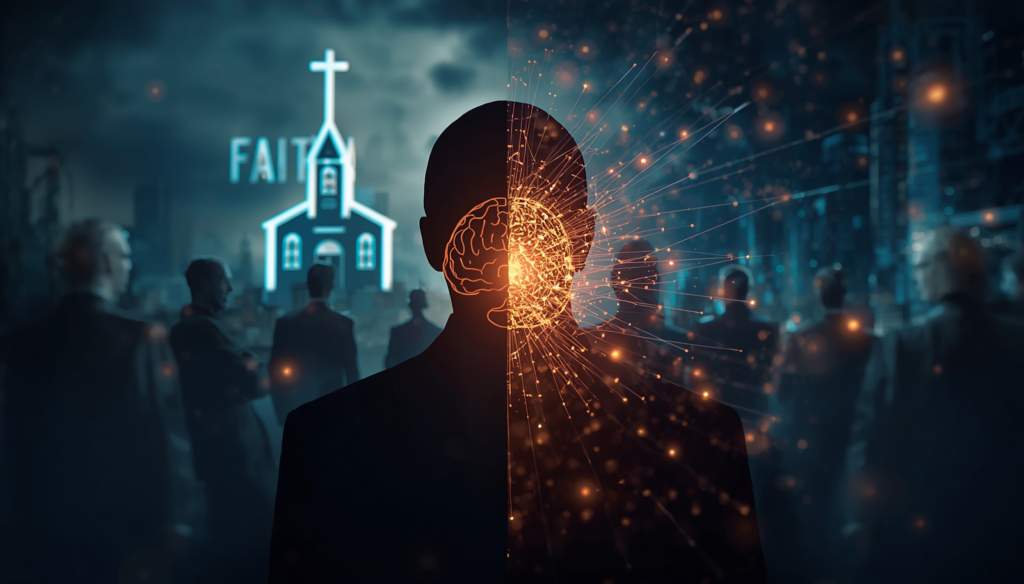
And increasingly, some of them are reaching for something deeper than business language. They are reaching for moral language. In some cases, even religious language.
That is the core tension behind the idea that tech billionaires want Christians to believe in AI: not just use it, not just tolerate it, but see its expansion as part of a larger moral duty.
That is a far more ambitious project than selling software.
The Moment the AI Pitch Changed
At the center of this conversation is a revealing claim: innovation must be defended not only as useful, but as morally necessary.
That is a major shift.
When a company says its technology is faster, cheaper, or more scalable, it is making a practical argument. People can evaluate that with common sense. Does it work? Does it save time? Does it solve a problem? Is it worth the cost?
But when someone says innovation is a “moral imperative,” the argument changes completely.
Now the question is no longer just whether the technology works. The question becomes whether resisting it is morally irresponsible. If AI is not only profitable but righteous, then critics are no longer cautious citizens. They become obstacles to progress.
That is the move happening in this conversation.
Will Manidis, the entrepreneur highlighted in the source story, argues that the public increasingly sees AI as harmful, exploitative, and spiritually corrosive. In his framing, people associate it with wasteful infrastructure, soaring energy demands, online vice, scams targeting the vulnerable, and a broader sense that modern technology is eroding the social fabric. His conclusion is that the industry has failed to offer a compelling moral defense of innovation itself.
That wording matters.
He does not simply say AI needs better PR. He suggests AI needs something closer to an apologetic.
And that is where the story gets far more interesting than a normal tech debate.
Why the Word “Apologetic” Changes Everything
In Christian thought, apologetics is the discipline of defending faith through reasoned argument. It is not emotional hype. It is not blind surrender. It is an attempt to explain why belief is rational, coherent, and worth holding.
Historically, Christian apologetics has been about making invisible truths intellectually defensible in a skeptical world. It seeks to persuade not by force, but through logic, evidence, and moral reasoning.
So when the language of apologetics enters the AI conversation, it signals something profound.
It means some people in and around the tech world recognize that public faith in AI is weak. It means they know this is no longer a matter of showing people a cool demo or a breakthrough benchmark. They understand that people are asking civilizational questions now.
What kind of world does AI create?
Who gains power from it?
Who gets displaced by it?
What values are embedded in it?
And can the people driving it be trusted with that much influence?
These are not technical questions. They are moral ones.
That is why AI is drifting into the language of belief.
Because when a technology starts reshaping work, politics, education, media, and daily life all at once, people naturally stop asking only what it can do and start asking what it is doing to them.
Why the Public Is Losing Faith
The skepticism surrounding AI did not appear out of nowhere. It is a response to reality.
People see AI-generated scams growing more convincing. They see fake voices, fake images, and fake videos getting harder to detect. They see automated systems replacing parts of human work while executives frame that process as inevitable efficiency. They hear warnings about existential danger from some of the same people racing to commercialize the technology. They watch giant data centers consume power and water while local communities deal with the costs. They see children growing up in a digital environment increasingly shaped by algorithms that are optimized for engagement, addiction, and manipulation.
So when the public feels uneasy, that unease is not ignorance. It is pattern recognition.
The industry often speaks as if skepticism comes from people not understanding AI. But many people understand enough to see the deeper issue: a small group of highly connected elites is building systems that may transform society, and those elites are asking for trust they have not earned.
That is a dangerous gap.
It is one thing for the public to be cautious about a new app. It is another for the public to doubt the motives of the people attempting to automate knowledge work, influence public discourse, and integrate machine intelligence into nearly every institution.
That is why the debate feels so charged. The question is not simply whether AI will be useful. The question is whether the current stewards of AI deserve the moral authority they are trying to claim.
The Oligarch Problem Behind the AI Boom
The source material frames this discussion in the broader context of American oligarchy, and that framing is essential.
AI is not rising in a neutral environment. It is rising inside an economy already dominated by concentrated wealth, concentrated platforms, and concentrated decision-making power. That matters because people rarely separate the technology from the people financing, owning, and deploying it.
When a handful of billionaires and tech executives dominate the conversation, the public does not just see innovation. It sees hierarchy.
It sees a familiar pattern: the same people who disrupted industries, avoided accountability, extracted enormous wealth, and shaped public discourse through private platforms are now telling everyone to trust them again as they build the next epochal technology.
That is why so many people recoil when AI is described as a moral project.
A moral project led by unaccountable elites does not sound like progress. It sounds like an attempt to sanctify power.
And that is the deeper reason this story resonates. It is not only about Christians, conservatives, or AI enthusiasts. It is about whether moral language is being used to soften public resistance to concentrated technological power.
Why Christians Matter in This Battle
Christians matter here because Christianity remains one of the few living traditions in American life that still asks non-market questions with seriousness.
A Christian framework does not evaluate everything by profitability, speed, or scale. It asks about truth, dignity, sin, limits, stewardship, and the moral shape of society. It resists the idea that because something can be built, it therefore should be built. It challenges the assumption that technological progress automatically equals human flourishing.
That makes Christians difficult audiences for a purely technocratic vision of the future.
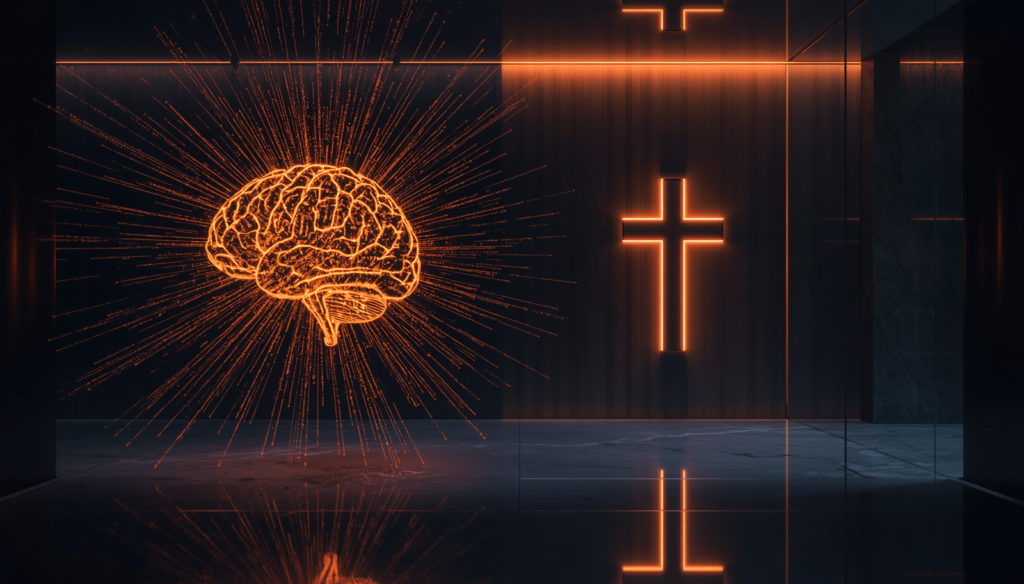
If AI leaders want broader legitimacy, they cannot rely only on investors, media, and policymakers. They also need cultural permission from communities that care deeply about the moral consequences of power. They need people who might otherwise see AI not as salvation, but as temptation.
And that is why religious language becomes strategically useful.
Once AI is framed as a means of advancing human creativity, defeating stagnation, strengthening civilization, and fulfilling a kind of moral duty to innovate, opposition can be recast as fear-driven or even ethically negligent. In that framework, to resist rapid technological development is to betray human potential.
But that is precisely the sort of claim Christians should examine carefully.
Because Christianity has never taught that power, scale, or capability are self-justifying goods. Quite the opposite. Christian thought is full of warnings about pride, idolatry, domination, and the seduction of systems that promise control while eroding humility.
If AI is being sold in quasi-religious terms, the right response is not automatic belief. It is discernment.
The Conservative Divide Reveals the Real Debate
The source story points to a striking tension on the political right. Some conservatives want AI embraced as a national necessity. Others see it as the product of elite ideology they deeply distrust.
That divide is revealing.
On one side are the techno-nationalists and innovation hawks. They argue that America must dominate AI for economic, military, and geopolitical reasons. Slow down, and rivals win. Regulate too heavily, and the nation falls behind. In this worldview, AI is not merely a tool of business growth. It is a strategic pillar of civilization itself.
On the other side are conservatives who see AI as tied to secular transhumanism, social engineering, family destabilization, labor displacement, and the erosion of what it means to be human. They hear the promises of the industry and see something spiritually hollow underneath them.
Both sides are responding to the same basic reality: AI is not neutral.
One side believes it must be captured and directed. The other fears it may corrupt whatever institutions touch it.
This is why the debate cannot be reduced to pro-tech versus anti-tech. The real divide is over legitimacy, anthropology, and trust. What is a human being? What is work for? What counts as flourishing? What kind of power should any industry possess?
Those are questions theology, philosophy, and politics all care about. Silicon Valley may prefer to treat them as secondary. Society no longer can.
The Strange Theology of the AI Era
One reason this story feels so unsettling is that modern tech culture often behaves like a substitute religion even when it insists it is secular.
It offers a narrative of salvation through progress.
It promises liberation from limitation.
It treats disruption as purification.
It surrounds its prophets with followers, its products with rituals, and its future with awe.
That does not make it a religion in the formal sense. But it does make it spiritually recognizable.
In that framework, AI becomes more than software. It becomes destiny.
And once destiny enters the room, moral criticism becomes harder to tolerate. Why? Because criticism no longer challenges only a product. It challenges a whole vision of history.
If you believe advanced technology is the engine of humanity’s ascent, then anyone asking whether the cost is too high can sound like an enemy of the future. That mindset encourages a quiet absolutism. It flattens every moral question into a race between acceleration and obstruction.
That is dangerous.
A society that cannot question its most powerful technologies without being accused of backwardness is a society handing too much moral authority to engineers and investors.
What Businesses Should Learn From This
For founders, brands, and operators, this story is more than cultural commentary. It is a warning.
The next wave of AI adoption will not be shaped only by performance. It will be shaped by trust.
Businesses cannot assume customers will embrace AI simply because it lowers costs or speeds up workflows. Increasingly, people want to know what the technology replaces, what it collects, what it distorts, and who benefits when it scales.
That means AI products now face a legitimacy test.
Does this tool help people or confuse them?
Does it increase dignity or reduce human beings to data points?
Does it support judgment or quietly replace it?
Does it create clarity, or does it flood the world with synthetic noise?
The companies that answer those questions honestly will stand out. The ones that hide behind hype will struggle.
In practical terms, this means businesses need to think beyond features. They need governance, transparency, clear usage boundaries, human oversight, and a language of responsibility that does not sound like a last-minute PR patch.
In other words, they need moral credibility.
And moral credibility cannot be borrowed from billionaire talking points. It has to be built.
The Aqyreon Take: AI Does Not Need Faith. It Needs Limits.
This is the heart of it.
AI does not need worshippers. It does not need an apologetic designed to shield powerful people from public scrutiny. And it certainly does not need a moral halo placed over industries that have not yet shown they can govern themselves responsibly.
What it needs are boundaries.
It needs leaders who are willing to admit that technological capability is not the same as moral legitimacy. It needs institutions strong enough to challenge concentrated power. It needs public voices brave enough to say that innovation, by itself, is not a sacred value.
Because not every acceleration is progress.
Not every disruption is renewal.
And not every future sold by billionaires is worth inheriting.
If Christians are being asked to believe in AI, they should ask a better question first: believe in what, exactly?
Believe in tools that assist human creativity without replacing human worth? That is one conversation.
Believe in systems that centralize power, commodify thought, displace workers, and then demand moral applause? That is another.
The difference matters.
The future of AI will not be decided only by engineers, investors, and political operators. It will also be shaped by communities that still believe some things are more important than efficiency. Communities that care about truth more than speed. Wisdom more than scale. Stewardship more than domination.
Those communities should not be shamed into silence by the language of inevitability.
They should press harder.
Because once tech elites start asking for belief instead of accountability, society is no longer just being sold a product. It is being asked to surrender moral judgment.
And that is exactly the point where discernment becomes a duty.